Sunday, January 11, 2015

A Pasty Proverb: International Guffaws and Gratitudes

Needs sauce’, I wish to myself. ‘Why do Plymothians think these are so marvellous?’ Sunning on a bench outside Oggy Oggy Armada Way, I mentally check this moment off my “do as the locals do” list. I was stuck between appointments in the city centre, having walked from my shared flat on Mutley. The first appointment was with Working Links, an indispensable program for a foreigner struggling to make ends meet in an economy whose currency nearly doubled that of my home. The second appointment I don’t recall but was likely with an organization that I wouldn’t have to book an appointment with back home: A mobile provider; a bank; a gadget shop. ‘Brits love appointments’, I lament. Lacking enough time to visit the only attraction I’d yet to scale (Smeaton’s Tower), I decide on another Plymothian delight: The pasty!

I chose Oggy Oggy because it was chock-full of pensioners and students. An outsider assumes this shows it’s decent (the elderly have years of pasty experience) and cheap. Also, I wanted to sit amongst the meandering shrubbery forming a backbone of Armada Plaza. It is one my favourite ways to watch Plymothians in their natural habitat.
From the moment I enter Oggy Oggy I feel the keen gaze of the employee, a lady with a few pasties under her belt (literally and figuratively). I stare below the glass-protected options. So many options…Casting a curious glance over my shoulder, I try to glimpse the innards of locals’ pasty choice. Shiny clinking forks block my view. Sit-in visitors ate their pasties with silverware next to side salads (miniscule piles of greenish things). Totally confused, I face the staff. She hadn’t moved.
“What do you recommend?” I query. Her reply: “Sit-in.”

I laugh. “No, what flavour?”

She sighs, a mixture of vexation and surprise. “Whatever you fancy!” Her implication: You must have a preferred type of pasty. Everyone’s eaten a pasty.

Anxious, I choose vegetarian because it seemed less overwhelming and possibly healthier. The lady unceremoniously pulls the pasty from the display, tucks it into a paper pocket, and hands it across the till with a Devonian grunt, “£2.20, love.” To my surprise, she cracks an amiable smile. “Where are you from?”

“The U.S.”
“I know THAT. But where?”
“Oh! Colorado.” Her grin extends. “Aahh, pretty place, that.”
Excited, I ask, “You’ve been?”
“No. I’ve seen pictures, like. WHY did you leave there for Plymouth?!” She is incredulous, as if referencing a toad-infested bog.

“For the pasties!” I offer a pasty salute upon exit.
Working my jaw through the glorified Hot Pocket, I notice a local friend strolling nearby. If I greeted her I was guaranteed a hug and chat about the weather. Instead, I savour the moment, musing on how concisely it represents life as an international citizen in Plymouth.  Here is my biased rendition of life as a foreigner in Plymouth. I wonder if other foreigners feel the same?
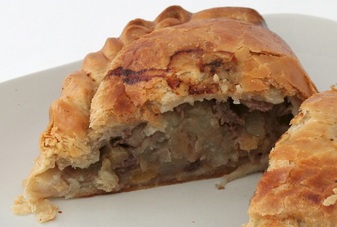
american opinion of plymouth, cornish pasty confuses americans
Four things I don’t understand…

1.A) Why is one food eaten two ways? From cakes to pasties, sandwiches to chips, certain foods are eaten with the decorum of Queen Elizabeth and at other times from paper receptacles while walking in rain. In my country, we observe food absolutes. Why am I rude to eat a pasty with my fingers inside but insane to request a fork with my take-away? True, there’s a gourmet burger movement in the States, but you always eat a burger with your hands.

2.A) Why do you disdain Plymouth when you’ve lived here your entire life and would never leave? I’m allowed to say ONE negative thing about Plymouth before you get defensive. Why keep your pride secret?

3.A) How do you determine when I’m your friend? At first, you ignore me or treat me like a potential criminal. At some point, you accept me. I know this when you deliver a magical and humorous bit of local knowledge reserved for close friends. Thank you!

4.A) Can I call you “janner”? Should I? Janner literally means someone who lives within 7 miles of the sea. But, I thinks it’s sometimes a derogatory term? And, sometimes a point of pride? Is “janner” like the n-word in the USA: You can only say it if you’re one them? 
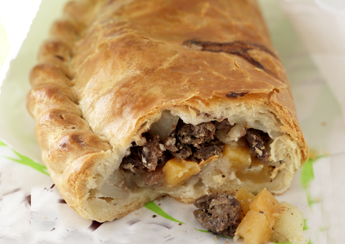
american opinion of British pasty, Plymouth best pasty shop
…And why I love them anyway
1.B) Your ability to see multiple uses for something exhibits a quintessentially British resourcefulness. You use gorgeous historic backdrops as scenes for modern festivals (The Hoe). Government buildings become galleries and restaurants (The Guildhall). Pubs are also community centers.

2.B) Yes, your initial negativity about Plymouth pains me (being told that I’m mad for relocating is disconcerting at best). But I see you picnic in the park, prune your petunias, and partake in parties. You show me how to love Plymouth the British way (quietly).

3.B) When I finally become your friend, I know you’re loyal. Plymothian “mates” go down with the ship (or pay for your taxi).
4.B) I adore the janner accent, especially when tinged with cider at a pub on the Barbican. Honestly, we don’t understand 75% of what you’re saying. But we love laughing with you!

So, Plymothians, on behalf of all immigrants, foreigners, longer-term visitors, and outsiders, allow me to say thank you for making Plymouth special. Thank you for being you, dichotomies and all. But tell us: Can we call you janner?

Monday, October 13, 2014

Lunch at the Afro Caribbean Pot in the Plymouth Market

When I was gifted three wiggling fish by a Bulgarian fisherman on the Plymouth Hoe, I had no idea what to do with them. Having not gutted a fish since the age of 8, under the guidance of my proud father, I called the one place I knew might be willing to cook my catch: the Afro-Caribbean Pot in the Plymouth City Market. I first noticed the proclamations of jerk chicken and pepper soup when shopping for fresh produce. I had a brief first taste at the Plymouth Flavour Fest (curried vegetables) and had been salivating to spend a leisurely lunch on their booth. Because the stall was packed during peak lunch hours, Rita asked me to visit for an early brunch. “What kind of fish are they?” she inquired. “Medium-sized and blue?” I responded. When I explained the receiving scenaio, she gleaned them mackerel. Schedule in hand, I invited my friend Emad, a Turkish PhD student, to join.

When we arrived on a Tuesday at 10:15AM we found three men already seated there: two Plymothians and an African named John whose London accent complemented his sunglasses (worn indoors), earphones, and tank top. He joked with the married owners, Antony and Rita, as the worked the kitchen. John had first met the couple in 2000 when fishing on the Hoe; he was a fitness instructor who visited weekly, at least.

Antony and Rita met in Ghana. A British-Jamaican tracing his African roots, Antony met Rita when boarding at her Ghanese hotel of employment. They returned to the UK in 2012 to homestead in Cornwall where their two daughters, aged nine and six, attend school. Working a stall in the Plymouth Market isn't easy: they wake around 4:30AM to commute across the Tamar Bridge. They prepare shop for doors to open at 9AM. By 5PM the doors close. Then, the tired parents head home, to cook dinner and prepare the family for tomorrow. “Don't you ever get sick of cooking?” I ask. Rita smiles, cooing,“I love to cook.”

Every customer is asked the same question: do you like it spicy? Emad and I nodded giddily. Sufficiently informed, Antony disappeard with our fish around the stall's corner as Rita prepared one of the double-burner stove tops in the space. The scent of pepper wafts to our noses; we hear the crisp sound of chopped vegetables.


Antony reappeared ten minutes later, handing Rita the bowl of our fish cut into thin strips with skin-on. She dusted them with flour and instructed over her shoulder, “Serve their salads.” Antony muttered under his breath, obliging.

As our stomachs gurgled in anticipation, we observed and conversed with the stall's occupants. Antony's parents immigrated to Plymouth in the 1950's from Jamaica. When I asked why, he shrugged, turning to Rita and John. “I don't know. Why did the British tell Jamaicans to come to the UK? They tell everyone at some point.” A smooth-skinned lady sat down, bow jauntily tied around her ballet bun. Greeted warmly by Rita, she began to read a Bible while they chat. Like mother and daughter, the lady and Rita discussed her recent stomach problems. Rita advised on the right herbs for today's lunch. I asked the girl about her reading materials. She tells me that she attends The River Church at 4PM every Sunday in the Guildhall. This service is attended by a diverse population from all corners of Devon. I am excited to learn of a new place for Going Churching, especially where 50% of the population is African.

An angel bestowing gifts from heaven, Rita leaned over the counter. She placed red plates laden with spiced fish, vegetables, and a tower of red-beans-and-rice before us. Emad and I groaned with delight. The delicate fish is soft on our tongues, refreshing despite it's peppery undertones. We sniffed in appreciation. I had gifted one of the fish to Antony and Rita; when Antony tried his portion he exclaimed, “That's got a kick to it!” As an expat-local, I had felt a little lackluster over the past week. I missed relaxing with my parents over dinner at their house. Then, as I sat with Emad over a plate of steaming home-cooked comfort food, I felt like a videogame character that had jumped onto an energy block. My face flushed.

Resolutely, Emad and I finished our meal. “One of the best I've had in Plymouth,” he lauded. As we paid our cash-only bill a round British man lifted his curly-haired daughter on the counter, delighting Rita and Antony. “He's a regular,” Antony told me, offering a huge plate of three jerk chicken breasts over rice and slathered with gravy. The man and his daughter came to the stall for this very lunch every single day. “He pays the rent!” Antony laughed.

Feeling satiated, Emad and I strolled back out the market doors, down Cornwall Street to Armada Way. Our only complaint was the cost of the meal: our salads and the fish lunch, supplied in part by me, totaled £10 each. Yet, we both perceived ourselves a little more Plymothian; the Afro Caribbean food stall was a right-of-passage for expat-locals. With pride we kissed lightly on the cheek and parted ways.


Sunday, October 12, 2014

The Plymouth Planner: Going Churching -- The Minister Church of St. Andrew's

Overview: On this episode of Going Churching, we visit the historic Minister Church of St. Andrew’s (Plymouth City Centre) followed by a bistro brunch, a long walk, and a local cider. 

Expected Cost: Thank God that Church is free. Brunch at Cafeé Rouge will probably run around £10: mains are about £6.95 and coffee refills aren't free! A pint runs around £3.

Solo Savvy? Yes; you will receive lots of extra prayers if you appear on a pew alone. 

Expected Duration: 3 hours. 

Requirements: Shoes fit for walking. A wide-brimmed Sunday hat is recommended. 

The Plan: The Minister Church of St. Andrew is located on the North end of the Plymouth Royal Parade, a hop away from the Plymouth Guildhall. The notable insignia, RESURGAM, hangs above its main entrance. The sign was erected during Reconstruction after the Luftwaffe Blitz of 1941. The Blitz left a “roofless shell” of St. Andrew’s and other cherished buildings. RESURGAM literally translates to “I will rise again.” The entire city adopted this slogan during the difficult years post WWII. 

The 9:30AM Holy Communion service follows a modernized version of the traditional Mass, containing the ritual sequence: stand, sing, sit, listen, kneel, pray, stand, say hello, sing, sit, listen, kneel, sit, listen, stand, walk, pray, nibble, sip, walk, sit, stand, sing, sing, and exit. 

If you’re not too hungry when Mass is over (St. Andrew’s communion is a nibble of Wharburton’s and a sip of syrupy-sweet wine), grab leaflets from the table to the left of the entrance and take yourself on a walk through the building. The pamphlets offer guided tours explaining the fascinating history of St. Andrews, its relics and antiques, and contain descriptions of the stained glass windows. Even if church touring isn’t your thing (or you’re wary of thetimefull citizens beckoning you with offers of post-church coffee and cakes) grab some reading materials to mull over during brunch.

Exit through the North Patio and take a sharp right toward North Cross. In a few yards, you will see the Cafeé Rouge. Positioned in the triangular-shaped white building on the corner, it boasts French-ness with guilded windows and a red front door. The waitress will slowly finish a bite of cake behind the bar before moseying over to seat you. When she does, ask for a window seat facing North Cross. You will recognize the canes of timefull church-goers at surrounding tables. In a town where nearly every institution closes on Sunday, Café Rouge proudly serves diners seven days a week. Order a coffee and a “French” breakfast.*** Don’t expect toast cut from one of the French loaves you see proudly displayed at the bar, however. Although my spinach, mushroom, and tomato omelette and coffee tasted lovely, I was disappointed by the same crusty Wharburton’s on my plate that St. Andrew’s blessed and served during Communion. Alas, you can take the French out of France, but you can’t take the white toast from the British (or God).

After poring through the St. Andrew’s history brochures and pouring coffee until you can’t possibly contain yourself, hit the toilet and the road. Head south down the Royal Parade. Take a left past the fountain, up the Hoe toward Smeaton’s Tower. Cruise past Plymouth’s historic landmarks: the Bowling Green on the south end (stay to watch the men play in their impeccably starched trousers and sweater vests); the panoramic view of Plymouth harbour; Smeaton’s tower; and the Tinside Lido pool. Walk past the tower and loop North, down the cobblestone streets with the ocean on your right. Just before you reach the Barbican shopping area you will notice a tall staircase leading to a lifted white bar called The Mayflower. Climb the stairs to find a pint and one of the best views of the harbour in the city. Ask the owner, who is surely working the bar, for a local cider. He’s a jolly old man who will be more than happy to entertain you, should you choose to chat. Otherwise, kick back at a stool next to the window, watch the sailboats float by, and say a little prayer for another relaxing, tasty, and fulfilling Sunday spent Going Churching.


**NOTE: Much to Emily's dismay, Cafe Rouge has closed! She now recommends walking to Monty's Cafe on the Barbican for breakfast instead. 

Friday, May 30, 2014

Have You Heard?

Hello, loyal readers!

I've built a big-girl platform for my big-girl writing! Please visit my new website to follow my travels and tribulations: BASEDtraveler

As always, feedback is welcome!

Love, Emily


Stelios Karouzakis

Thursday, May 22, 2014

The Plymothian Chronicles: A Guiding Tour with Eliot Siegel


Eliot Siegel Photography: http://eliotsiegel.com/

Eliot Siegel, the photographer who happens to be my landlord, agrees to meet me on a very busy Saturday to guide me through his exhibit at the Theatre Royal Plymouth. We meet in the first-floor café, its doors open to the unseasonably warm air (17Celsius). He greets me with his usual light hug and kiss on the right cheek, a kindly gesture I’m accustomed to, albeit struggle to contextualize. Eliot was born in New York but has called Plymouth home for over 11 years, making him a member of the expat-local population annually dominant in this blue-collar port town. While we wait for the pastel-clad timefull* ladies in front of us to order brie-and vegetable soup (read: light-orange liquid cheese with green dots and transparent chunks), we ruminate on important things, like desiring American-style cake frosting. Eliot orders chocolate cake, symbolic of a true expat-local (the English love cake. But, a good English boy orders fruit cake whenever available). We carried our tray of cake, Cappuccino, pre-packed ham sandwich, and sparkling water to a table in the sun, past the ladies sipping soupy brie so slowly I check my watch. Eight hours until close, they should have enough time…

Over lunch, I ask Eliot about his life as an artist in Plymouth and the city’s prospectus. Knowing that I was a fellow art-loving expat-local, he provided candid responses. Eliot moved to Plymouth as a divorcee; his wife had the kids in nearby Cornwall. In fact, he only visited Plymouth for the first time on a lunch date, when he happened to notice an advertisement for “New-York style living” in scaffolding-clad building. Today, he spends the majority of time in that same Plymouth flat and the rest at a flat in London. My bum barely warms the café seat before Eliot states, “Plymouth is limited culturally.”

Me: “I always hear that, but when I walk home from the Royal Parade on weeknights, I don’t feel like a minority because everyone is a minority. All the people around me are talking in different accents and languages.”

Eliot: “I don’t mean that there aren’t many cultures here. There’s just not much to do culturally in the city. There are plenty of cultures.”

Me: “What’s a cultural thing to do?”

Eliot: “Art galleries. Currently, there’s only three art galleries in the city that I know of. Culture is access to art, film, and theatre. We do have SOME OF those things here. There’s the Drum Theatre, which is a fringe theatre that’s internationally recognized. I’ve seen one group from Belgium there probably four times; they’re just wonderful. Outside the theatre [Royal] there is the Plymouth Arts Centre for foreign film.”

Eliot begins speaking animatedly faster. He gestures toward the bored, brown, boxy 1970’s-era office building across the pedestrian walkway.

Eliot: “In fact, they recently renovated the Plymouth Arts Centre and it looks great. Except they’re talking about moving it to that hideous piece of Communist shit. Apparently Hilton bought the building and are going to give a floor to the Centre. We’ll see if that ever actually happens, though.”

Me: “Eliot, I am surprised to see you get so upset about something in Plymouth. I thought you were living here because you ‘have a reason to,’ but it seems like you’re dedicated to the city. Why?”

Eliot: “I feel like I’m part of the community at this point. I’m going to continue to live here. I care about the city and it getting better. Eleven years ago, I couldn’t say the P-word.”

Me: “Plymouth? Why not?”

Eliot: “It has a terrible national reputation. Plymouth is a Navy town. It used to be a beautiful city before World War II. Now, it’s not a beautiful place to be. It’s improving visually; it’s become more palatable.”

Me: “So if the city is becoming more beautiful and there are so many cultures here, why isn’t there a cultural community? It seems to me like it’s not the people’s fault. It’s just like, they’re not incited to imagine or engage. Do you think so?”

Eliot rolls his eyes and allows a low, rolling chuckle. He repeats himself for emphasis.

Eliot: “Well, it’s a Navy town. There’s a lot of apathy around cultural ideas. There’s a huge unseen art community with nowhere to go. I mean, there are 1,000’s of graduate art students in Plymouth who have nowhere to exhibit and have to try their luck in London. There are no photography galleries in Plymouth. They can’t stay in the beautiful Southwest. They have to try their hand in London, and there’s only 10 galleries there.”

Me: “How can we bridge the gap between culture and being culturally active?”

Eliot: “People are coming in from other parts of the country and the world. They want to live somewhere they enjoy. They want their Plymouth to be more special.”

As Eliot has three photo shoots this afternoon, we decide to dart out of the café, up the stairs, and to his exhibit. Our ambient music is the lightly clinking glassware from the second-floor Theatre Royal Restaurant. I view the photos and listen to his explanations, noticing something that surprises me. Me: “Why don’t you take any pictures of Plymouth?”

Eliot: “Plymouth isn’t an interesting place visually.”

Me: “I completely disagree! I see things here all the time that I think would make great pictures, especially along your grunge style. Have you seen the graffiti below the motorway by Sainsbury’s on the way to Plympton?” Eliot: “I guess I just never feel inspired to walk around Plymouth and explore.”

It’s as if someone drops a Discman in my brain. Here we are, listening to a great track about the merits of Plymouth, lamenting the apathy and lack of engagement, then the track skips a beat. Me: “Eliot! Are you serious? You’ve already written off Plymouth, just like everyone else! You won’t even give it a try.”

Ever the English stoic, Eliot laughs and changes topic. We finish his exhibit in good spirits and walk together down the Royal Parade. We elevate our volume to accommodate honking buses and screaming seagulls. Eliot hugs and kisses me; I thank him profusely for his willingness. As we turn to go, he shouts not to get sunburned. I shout back, “Go explore!” We both laugh.

Thursday, May 15, 2014

The Plymothian Chronicles: Sweeties


Last weekend marked the annual broadcast of the Eurovision Song Contest (dubbed Eurovision). Since its inception in1956, Eurovision has become a venerable competition for the NEXT BIG STAR. Mathematically, Eurovision = (Bollywood) + (Europe). ABBA famously launched their career here. What’s odd is that this over-the-top, hyper-sanguine event is a cherished institution in one of the most reserved, caustic, and emotionally lethargic social groups: the British. One particular moment during this year’s Eurovision contest highlights a fascinating social element that seems to juxtapose British temperament: British obsession for sweet treats. I believe the British must maintain their saccharine diet to psychologically balance their cultural bitterness.

While waiting for telephone votes tally, the Danish host of this year’s Eurovision, Liza, surprised the French, Maltese, and British performers with their favourite foods. Liza good-naturedly quizzed the artists about their preferences before presenting their treats. The French and Maltese buoyed back, engaging in smiley and supportive verbal tennis. The French group even kissed Liza when she handed them bowls of Asian noodles. Then came the British performer, Molly, whose singular moniker mirrored her aloof attitude. Liza was visibly frustrated by Molly’s inability to respond except to shrug and mutter, “I guess.” The presenter eventually persuaded Molly to admit that she liked a certain cake shop. Liza then handed the singer one of the bakery’s special caramel concoctions. With a confused look on her face, Molly stretched a single hand out and barely squeaked, “Oh, wow, thanks…”

In the UK, cakes are more ubiquitous than coffee. For instance, a local museum café currently offers a special deal: buy a cake between 9AM and 11:30AM and receive a free coffee. There’s no chicken-or-egg argument here; it’s obvious which product comes first. It’s nearly impossible to enter a place of business without seeing a cardboard box of £1 charity sweets, be it a bar, clothier, or corporation. On the honour system, insert £1 and choose a baggie from the pile. While you can’t get green leafy lettuce at the Harvester Salad and Grill, you better believe those charity sweet containers are ALWAYS stocked.

What really spurned my sweetie-awareness is the copious amounts of half-eaten or unopened sweets littering the ground. I have never been to a place with so many sugary confections ditched along the side of the road. The UK is ostensibly so inundated with sweets that they can afford to take the treats for granted. Sick of your Lion Bar? Toss it to the ground and switch to Fruit Pastilles at the next Tesco.

On any given day you can watch the citizens of my town conversing on their daily errands. Many of them briefly pop into a shop to purchase a Yorkie bar or Bonaffe biscuit. They discuss the weather (“supposed to get bad this weekend”), the government (“complete mentalists”), their jobs (“I can’t be bothered to look for something else”), etcetera. It’s as they replace each salty word with a sugar-packed bite. Out goes sour; in goes sweet.

At first, I pitied the British for their chaffing ethos. Until I realized that this culture chooses and protects its conversational folkways. After watching many satirical jokes fly over my vapid American noggin, a friend kindly advised me to watch the British comedy, Peep Show. It’s a witty, dark, and irate sitcom that “perfectly explains British humour.” Despite my steadfast YouTube-ing of the series, I was still taken aback when recently talking to my flatmate about her relationship. She was annoyed by her boyfriend who kept apologizing for not spending time with her and doling out compliments like a 17-year-old after his first kiss. “See, when we broke up a while ago, it was because he never complimented me and we didn’t see each other a lot. Now, he keeps saying nice things and communicating! I can’t win!” I look at her wide-eyed. Doesn’t that mean you did win?

To an expat, the omnipresence of cakes and sweets in the British diet seems ironic. Upon further consideration, I am grateful for their national sweet-tooth. I think the sweeties provide a pleasant yin to the British yang. It’s their daily vitamin, the missing nutrient not produced naturally in their collective psyche. As my waistline will attest, the pursuit of cake is one British tradition I’ve gladly adopted. If a caramel cake is required for the average Brit to crack a smile on live television or a Curly Wurly for my flatmate to give her boyfriend a smack on the lips after dinner, then Long Live the Queen Victoria Sponge Cake!

Monday, May 12, 2014

Emily's Notes: A Poor Poet's Present (Happy Mother's Day)

Because you're my Mom
You always care about
The things I always care about.
Even if you really don't care
At all
(Except you DO really care about
What I REALLY do care about)

Caring this way
Is a specific skill
Only mom's have.


Mom, the thing is:
I really care about you.

So, in caring about me
You have learned about caring
About you.

And in caring about you,
I have learned about caring
About me.

Caring about me, caring about you.

Only you and I know
Why this is so true.

Why all of this means,
That I love you.

Photo courtesy of Sarah Casewit photography: www.sarahcasewit.com